Because of federal government policies, Canada’s real estate wealth is becoming increasingly concentrated in the hands of the richest
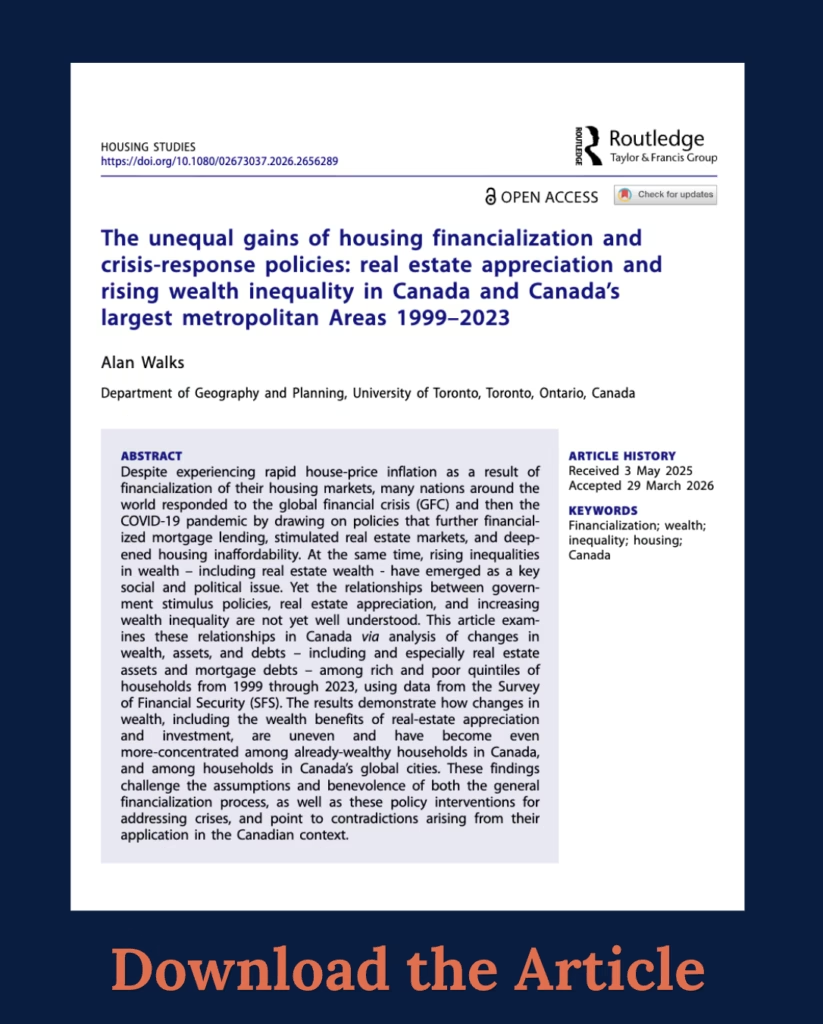
This article examines the relationship between Canada’s rising real estate values, expansive housing finance policies, and resulting wealth inequality. Despite experiencing rapid house-price inflation as a result of financialization of the housing market, Canada responded to the global financial crisis (GFC) and then the COVID-19 pandemic by drawing on policies that further financialized mortgage lending, stimulated real estate markets, and deepened housing inaffordability.
The article explores how this affected wealth inequality, by analyzing changes in the composition of household wealth and debts among quintiles of households from 1999 through 2023, using data from the Survey of Financial Security (SFS). It shows that rises in real estate wealth were captured and concentrated in the portfolios of Canada’s richest households, while leaving behind Canada’s poorest households. The findings challenge the assumptions and benevolence of both the general financialization process, as well as policy interventions for addressing financial crises, and point to contradictions arising from their application in the Canadian context.
Far from making it easier for renters to buy homes, in the long run, Canada’s financialization of mortgage lending has made it easier for those that already own real estate to take out loans and buy up more. Canada’s richest are shown to be the principal beneficiaries of the deepening financialization of housing.
Key Takeaways
Between 1999 and 2023 across Canada:
- Federal government policies and programs, such as the Canada Mortgage Bonds (CMB) program, were responsible for financializing the Canadian housing system. This was heightened during first the Global Financial Crisis (GFC) and then later the COVID-19 pandemic when additional federal government programs like the Insured Mortgage Purchase Program (IMPP) made it even easier for households, especially those that already owned real estate, to take out loans and invest in housing.
- The value of real estate wealth escalated faster than other forms of wealth, rising from 33 percent to 42 percent of all household wealth as result of all the additional investment this caused. More than half the increment in total household wealth (52 percent) was due to appreciation in the value of real estate.
- Approximately 60 percent of all the growth in real estate wealth accrued to the richest 20 percent of households
- The poorest 20 percent did not benefit at all from real estate appreciation
- Real estate wealth gains were especially concentrated among wealthy households in the Toronto and Vancouver metropolitan areas. Thus, not only did federal government programs which financialized the housing market cause an increase in wealth inequality, they also are responsible for increasing spatial inequality.